Everyone’s talking about the layoffs.
Everyone’s talking about the outage.
But almost no one is connecting the two.
In the last week:
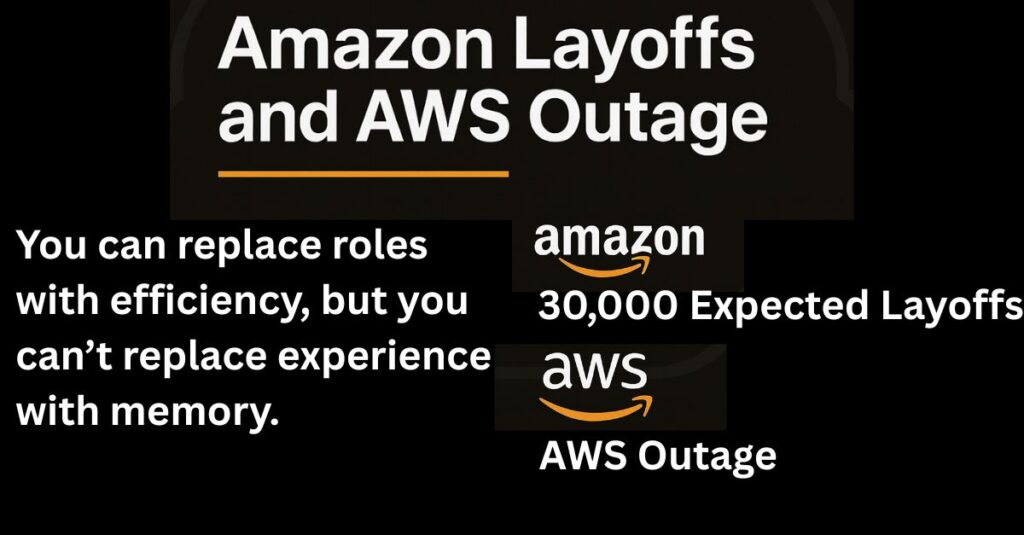
- Amazon reportedly plans to lay off ~30,000 corporate employees — which, if accurate, would bring its total cuts since 2022 close to ~75,000.
- Its cloud division Amazon Web Services (AWS) experienced a major outage lasting hours, which some analysts say followed the replacement of ~40 % of DevOps engineers with automation and AI systems.
Here’s the emerging pattern: Amazon isn’t just “cutting costs.” It’s restructuring how work gets done.
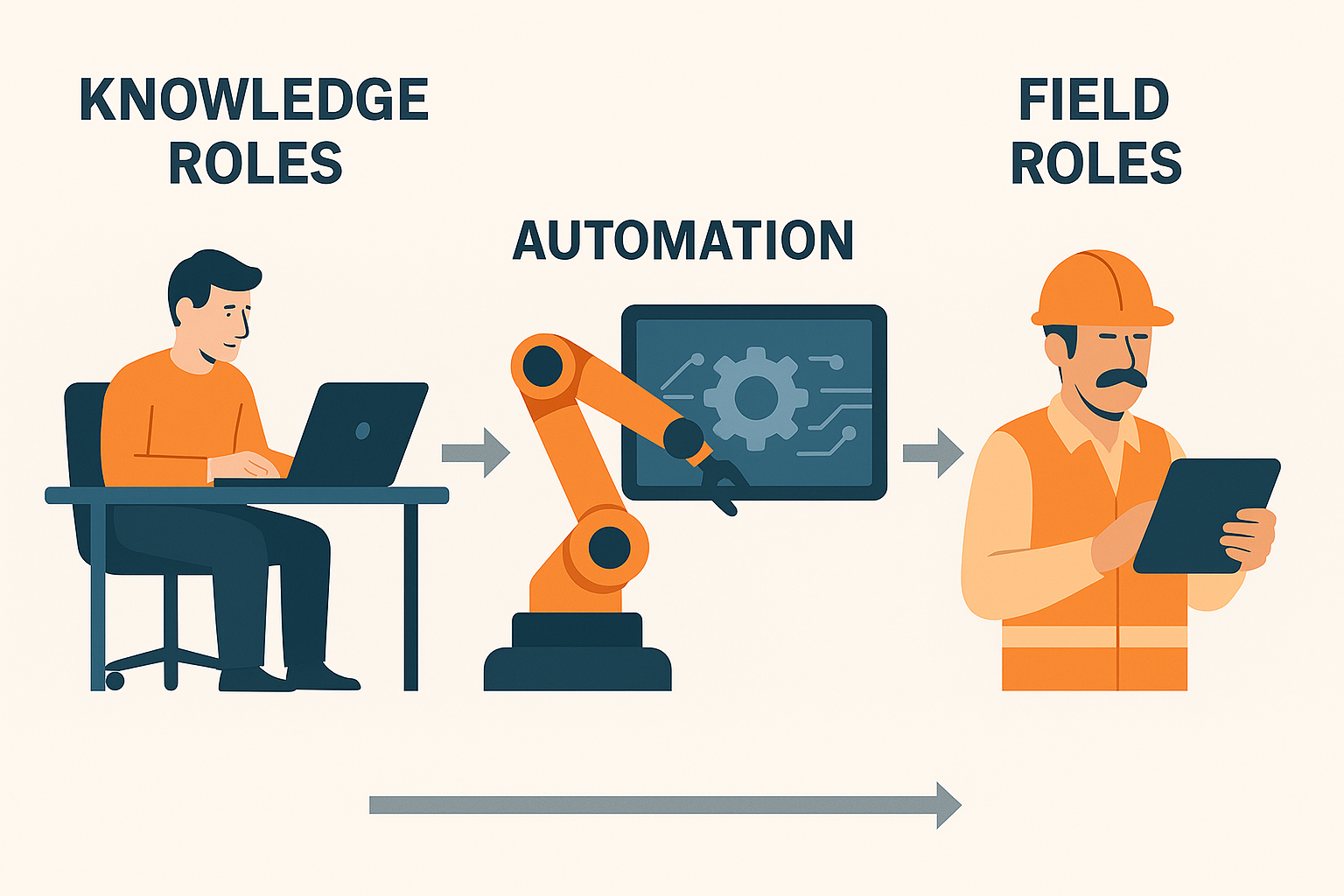
Corporate-knowledge roles are being swapped out for automation. Meanwhile, warehouse hiring continues to climb.
That’s not a coincidence — it’s a blueprint.
AI didn’t cause the outage. The outage happened because the people who built the system weren’t there to fix it. And that’s precisely why these layoffs matter.
You can replace roles with efficiency, but you can’t replace experience with memory.
This isn’t a blip. It’s a turning point.
1. Amazon Layoffs + Automation = A New Operating Model
Amazon recently confirmed a 14,000-position corporate workforce reduction, citing its pivot toward AI and leaner operations. (Source: AP News)
Simultaneously, AWS disclosed hundreds of job cuts — even as it posted 17 % growth and $11.5 billion in operating income. (Source: Reuters)
What’s happening isn’t just headcount trimming. Amazon is turning its internal structure into a “work done by machine + field force” hybrid.
- Knowledge work, strategizing, coordination roles = being automated or off-shored.
- Physical execution (warehouses, logistics fulfilment) = still human-driven and growing.
- Middle layers of management and traditional back-office are getting replaced, not by fewer people — but by different workflows.
2. The AMS Outage Was a Symptom – Not the Cause
When AWS suffers an outage, the media focuses on tech failures. But deeper still:
“The talent who understood the deep failure modes is gone… every incident becomes more likely when you’ve hollowed out your engineering ranks.” (Source: The Register)
In other words: Automation may handle 90 % of tasks — but it struggles when the unexpected happens.
Amazon’s outage underscores what many sellers should consider: systems don’t just require machines — they require people who understand the machines.
3. Why Amazon Sellers Should Care (Yes, Even If You’re “Just” a Seller)
You may ask: “Why does this matter if I’m running products on Amazon?”
Here are three reasons:
- Shifting priorities mean changing rules. When Amazon focuses less on middle-man roles and more on warehousing/fulfilment and automation, downstream sellers may face compressed support, rising expectations, and fewer “human buffers.”
- Supply chain + fulfilment become strategic weapons. If Amazon is investing in faster fulfilment and fewer code engineers, then your logistics, prep quality, and delivery speed will matter far more for visibility and conversion.
- Risk of indirect fallout. Customers, marketplace algorithms, ad costs, all can be impacted when a platform is restructuring. Sellers may need to adapt faster.
4. What Amazon Sellers Should Do Right Now
A. Strengthen your supply chain muscle. Packaged right, delivered on time, confident quality.
B. Document and test your back-office processes. Automation is rising, so human error will be punished harder.
C. Build redundant systems. Don’t rely solely on Amazon’s tech or support.
D. Focus on brain-trust, not bodies. Hire or contract people who know your systems and can troubleshoot, it’s increasingly rare.
5. The Era of “Just Add Traffic” is Over
In previous years, the formula was simple: ads drive traffic → traffic drives sales.
But with Amazon shifting its internal model toward fewer knowledge roles and more automation + fulfilment labour, the gameplay changes.
Your listing, logistics, and support still matter. Perhaps now, more than ever.
Because while machines can run systems, they rarely understand them. And sellers who recognize that gap, and build around it, will be in the strongest position in this next phase.