“How much does the average Amazon FBA seller actually make?”
One of the most common questions we hear.
The answer is surprisingly complicated.
You’ll find articles claiming Amazon sellers make anywhere from a few hundred dollars a month to millions each year. While those numbers aren’t necessarily wrong, they often lack the context needed to set realistic expectations.
At Ecomergize, we work with brands ranging from new product launches to established seven-figure businesses. The reality is that Amazon is still one of the best ecommerce opportunities available—but success has become increasingly dependent on execution rather than simply listing a product.
Let’s break down what the data says in 2026.
What Does the Average Amazon FBA Seller Make?
According to Jungle Scout’s latest seller research:
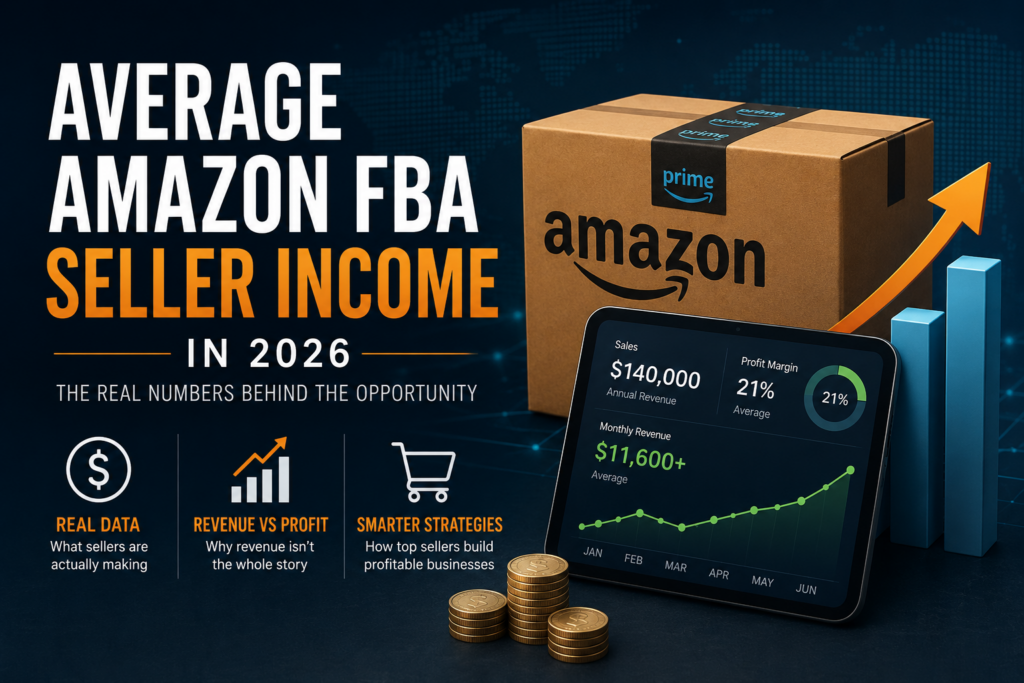
- The average small-to-medium Amazon seller generates approximately $11,600+ in monthly revenue, or roughly $140,000 annually.
- New sellers average nearly $30,000 in annual profit once they become established.
- Approximately 21% is the average reported profit margin among SMB sellers. (Jungle Scout)
Those numbers sound impressive—but they don’t tell the whole story.
Revenue is not income.
Revenue Isn’t Profit
One of the biggest misconceptions new sellers have is confusing sales with take-home income.
For every product sold, there are numerous expenses including:
- Product cost
- Ocean or air freight
- Import duties
- Amazon referral fees
- FBA fulfillment fees
- Advertising
- Storage fees
- Returns
- Software subscriptions
- Payroll or agency costs
A seller generating $500,000 in annual sales may actually earn less than someone generating $300,000 if margins aren’t managed correctly.
This is why experienced brands spend just as much time optimizing profitability as they do growing revenue.
Why Income Varies So Much
There really isn’t an “average” Amazon seller.
Instead, there are several completely different business models.
Some sellers:
- Sell one private label product.
- Manage hundreds of wholesale SKUs.
- Operate nationally recognized brands.
- Use Amazon as only one sales channel among many.
Category also matters.
For example:
- Grocery brands often operate on much thinner margins.
- Home goods may have larger shipping costs.
- Beauty brands typically spend significantly more on advertising.
- Premium branded products often command higher margins through stronger branding.
That’s why two sellers with identical revenue can have dramatically different income.
The Biggest Difference Between Successful Sellers
When we audit Amazon accounts, we rarely find businesses failing because of one catastrophic mistake.
Instead, we usually find dozens of small inefficiencies:
- Advertising campaigns wasting budget
- Poor keyword targeting
- Under-optimized listings
- Weak product images
- Low conversion rates
- Inventory shortages
- Pricing that doesn’t reflect true profitability
None of these issues individually destroys a business.
Together, they absolutely can.
The Amazon Marketplace Is Becoming More Efficient
One trend is becoming increasingly clear.
Amazon is rewarding operational excellence.
Brands that consistently succeed tend to:
- Keep inventory in stock.
- Invest in high-quality listing content.
- Optimize advertising weekly.
- Monitor profitability by SKU.
- Build recognizable brands instead of competing only on price.
As Amazon continues investing in AI across search, advertising, fulfillment, and recommendations, operational discipline will likely become even more important. Sellers who understand their numbers and continuously optimize their businesses are in the strongest position to grow. (Jungle Scout)
Should You Start Selling on Amazon in 2026?
Absolutely—but with realistic expectations.
The days of uploading a random private label product and generating six figures with little competition are largely behind us.
Today’s successful sellers treat Amazon like a real business.
That means:
- Choosing products carefully.
- Understanding margins before launching.
- Investing in branding.
- Continuously optimizing listings.
- Monitoring advertising performance.
- Managing inventory proactively.
The opportunity is still enormous—but so is the competition.
The Metric That Actually Matters
Instead of asking:
“How much does the average Amazon seller make?”
A better question is:
“How profitable is each SKU after every expense?”
Revenue looks great on a dashboard.
Profit builds businesses.
The brands that continue winning on Amazon aren’t necessarily generating the most sales—they’re generating the healthiest businesses.
In Conclusion
The average Amazon FBA seller income in 2026 provides a useful benchmark, but it shouldn’t be your goal.
Focus on building a business with strong margins, efficient advertising, reliable inventory management, and listings that convert consistently.
At Ecomergize, that’s exactly what we help brands do every day. Whether you’re launching your first product or scaling an established catalog, long-term success comes from optimizing the metrics that truly matter—not just chasing higher revenue.