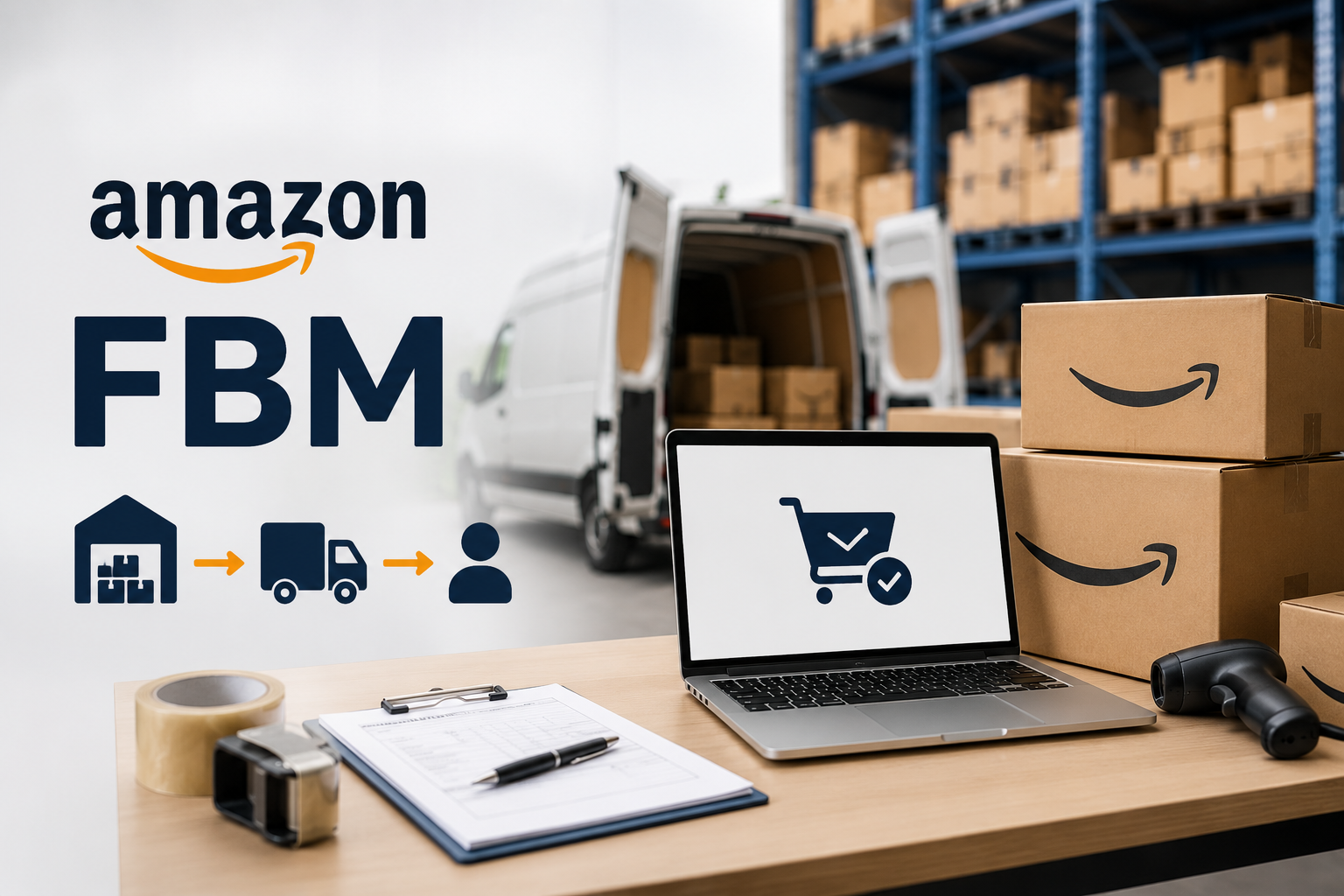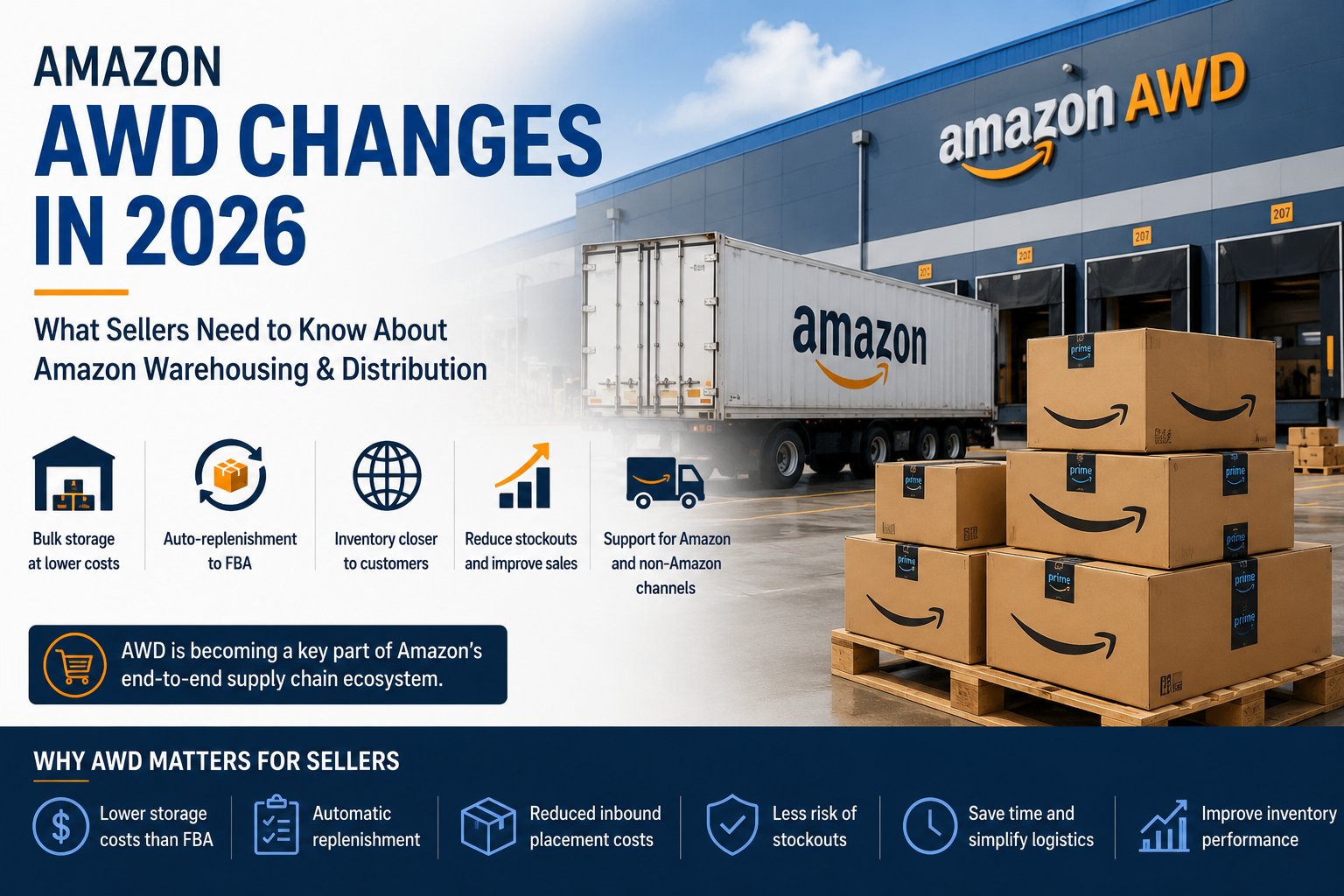
Amazon FBM gives sellers greater control over inventory, shipping, packaging, and multichannel fulfillment.
When people think about selling on Amazon, Fulfillment by Amazon (FBA) usually gets most of the attention. However, Amazon FBM (Fulfillment by Merchant) remains a powerful fulfillment option that gives sellers greater control over inventory, shipping, and customer experience.
For many businesses, FBM isn’t simply an alternative to FBA—it’s the better solution. Whether you’re selling oversized products, custom-made items, seasonal inventory, or managing your own warehouse, Amazon FBM can offer flexibility that FBA simply cannot.
Understanding how Amazon FBM works, when to use it, and how it compares to FBA is essential for building a profitable Amazon business in 2026.
What Is Amazon FBM?
Amazon FBM, or Fulfillment by Merchant, is a fulfillment method where the seller stores inventory, packs orders, ships products directly to customers, and manages customer service related to fulfillment.
Unlike Amazon FBA, Amazon does not store or ship your products. Instead, you are responsible for the fulfillment process after a customer places an order.
This allows sellers to maintain complete control over inventory while still leveraging Amazon’s marketplace to generate sales.
Source: https://sell.amazon.com/fulfillment-by-merchant
Amazon FBM vs FBA
One of the most common questions new sellers ask is whether they should choose Amazon FBM vs FBA.
The answer depends on your products, margins, and business goals.
Amazon FBA
With Fulfillment by Amazon, Amazon stores inventory inside its fulfillment centers and handles picking, packing, shipping, customer service, and returns.
FBA is often ideal for:
- Fast-moving products
- Small and lightweight items
- Businesses focused on Prime eligibility
- Sellers who don’t have warehouse space
Amazon FBM
With Fulfillment by Merchant, sellers maintain control over fulfillment.
FBM works well for:
- Oversized products
- Heavy items
- Customized products
- Low-volume inventory
- Products with unpredictable demand
- Businesses that already operate warehouses
Many successful brands actually use both fulfillment methods together.
The Amazon FBA FBM Hybrid Model
Rather than choosing one fulfillment method exclusively, many experienced sellers operate an Amazon FBA FBM hybrid model.
For example:
- Fast-moving products stay in FBA.
- Slow-moving products remain in FBM.
- Oversized products ship through FBM.
- Backup inventory remains available through FBM during FBA stockouts.
This approach provides flexibility while reducing inventory risk.
As Amazon continues adjusting FBA fees and storage costs, hybrid fulfillment strategies have become increasingly common.
Amazon FBM Shipping
One of the biggest responsibilities with Amazon FBM is shipping.
Because sellers fulfill orders themselves, maintaining reliable shipping performance is critical.
Successful FBM sellers focus on:
- Fast order processing
- Accurate tracking uploads
- On-time shipping
- Low cancellation rates
- Strong customer communication
Meeting Amazon’s performance standards helps protect seller account health and improves customer satisfaction.
Source: https://sellercentral.amazon.com/help/hub/reference/external/G200285170
Amazon FBM Shipping Requirements
Amazon establishes several performance metrics that FBM sellers must meet.
Some of the most important include:
- Valid tracking rate
- On-time delivery rate
- Late shipment rate
- Order defect rate
- Cancellation rate
Failing to meet these requirements can negatively impact account health and even lead to selling restrictions.
Maintaining consistent operational processes becomes especially important as order volume grows.
Amazon FBM Fees
One advantage of Amazon FBM is avoiding many of the fulfillment fees associated with FBA.
However, sellers should remember that FBM still includes:
- Amazon referral fees
- Shipping costs
- Packaging materials
- Warehouse expenses
- Labor costs
- Customer service costs
Although Amazon doesn’t charge FBA fulfillment fees, sellers become responsible for many of those operational expenses themselves.
Comparing your total fulfillment cost—not just Amazon’s fees—is essential before deciding between FBM and FBA.
Source: https://sell.amazon.com/pricing
Amazon FBM Shipping Rates
Shipping costs vary significantly depending on:
- Package size
- Weight
- Carrier
- Shipping speed
- Destination
Many sellers negotiate discounted commercial rates with carriers such as UPS, FedEx, or USPS.
Others use Amazon Buy Shipping, which provides discounted shipping labels while helping maintain performance metrics.
Choosing the right shipping strategy can significantly improve profitability.
Advantages of Amazon FBM
Amazon FBM offers several important advantages.
Greater Inventory Control
Inventory remains inside your own warehouse or third-party logistics provider instead of Amazon’s fulfillment network.
Lower Long-Term Storage Costs
Businesses carrying slower-moving inventory often avoid the long-term storage fees associated with FBA.
Easier Product Customization
Products requiring special packaging, inserts, bundling, or personalized items are often easier to manage through FBM.
Better Multi-Channel Fulfillment
Inventory stored outside Amazon can also fulfill orders from:
- Shopify
- Walmart
- eBay
- Etsy
- Retail customers
- Wholesale accounts
This flexibility becomes increasingly valuable as brands diversify beyond Amazon.
Challenges of Amazon FBM
While Amazon FBM offers greater flexibility, it also requires more operational responsibility.
Sellers must manage:
- Inventory storage
- Warehouse operations
- Shipping
- Returns
- Customer communication
- Staffing
- Carrier relationships
For smaller businesses, these responsibilities may outweigh the cost savings.
Is Amazon FBM Right for You?
Amazon FBM is often the best choice if you:
- Already own warehouse space.
- Sell oversized or heavy products.
- Need custom packaging.
- Sell across multiple marketplaces.
- Want greater inventory control.
- Have established shipping operations.
Conversely, FBA may be a better option for businesses prioritizing Prime eligibility, hands-off fulfillment, and simplified logistics.
Frequently Asked Questions
What does Amazon FBM mean?
Amazon FBM stands for Fulfillment by Merchant, meaning the seller stores inventory and ships customer orders directly instead of using Amazon’s fulfillment centers.
Is Amazon FBM cheaper than FBA?
It depends. FBM avoids Amazon’s fulfillment fees, but sellers assume responsibility for warehousing, shipping, labor, and packaging costs. The most cost-effective option depends on your products and operational capabilities.
Can Amazon FBM products qualify for Prime?
Yes. Sellers can qualify through Seller Fulfilled Prime if they meet Amazon’s eligibility and performance requirements.
Source: https://sell.amazon.com/programs/seller-fulfilled-prime
Can I use both Amazon FBA and FBM?
Absolutely. Many established brands use a hybrid strategy that combines both fulfillment methods to maximize flexibility, reduce stockouts, and optimize costs.
Amazon FBM Continues to Be a Valuable Fulfillment Strategy
Despite Amazon’s continued investment in FBA and Supply Chain Services, Amazon FBM remains an excellent option for many sellers. Businesses that value operational control, multi-channel fulfillment, customized shipping, or lower storage costs often find FBM provides advantages that FBA cannot.
As fulfillment costs continue to evolve in 2026, understanding when to use Amazon FBM—and when to combine it with FBA—can help sellers build a more resilient and profitable business.