Amazon PPC Auto Campaigns
Amazon PPC auto campaigns remain one of the most valuable advertising tools available to Amazon sellers in 2026. While many sellers focus almost exclusively on manual campaigns, auto campaigns continue to uncover profitable keywords, identify changing customer search behavior, and provide valuable data that improves both paid advertising and organic SEO.
At Ecomergize, Amazon PPC auto campaigns are a core component of every advertising strategy we manage. Whether we’re launching a new ASIN or optimizing a mature seven-figure catalog, auto campaigns consistently uncover opportunities that manual campaigns alone would never find. Rather than viewing them as “beginner campaigns,” we treat them as one of the best research tools inside Amazon Ads.
What Are Amazon PPC Auto Campaigns?
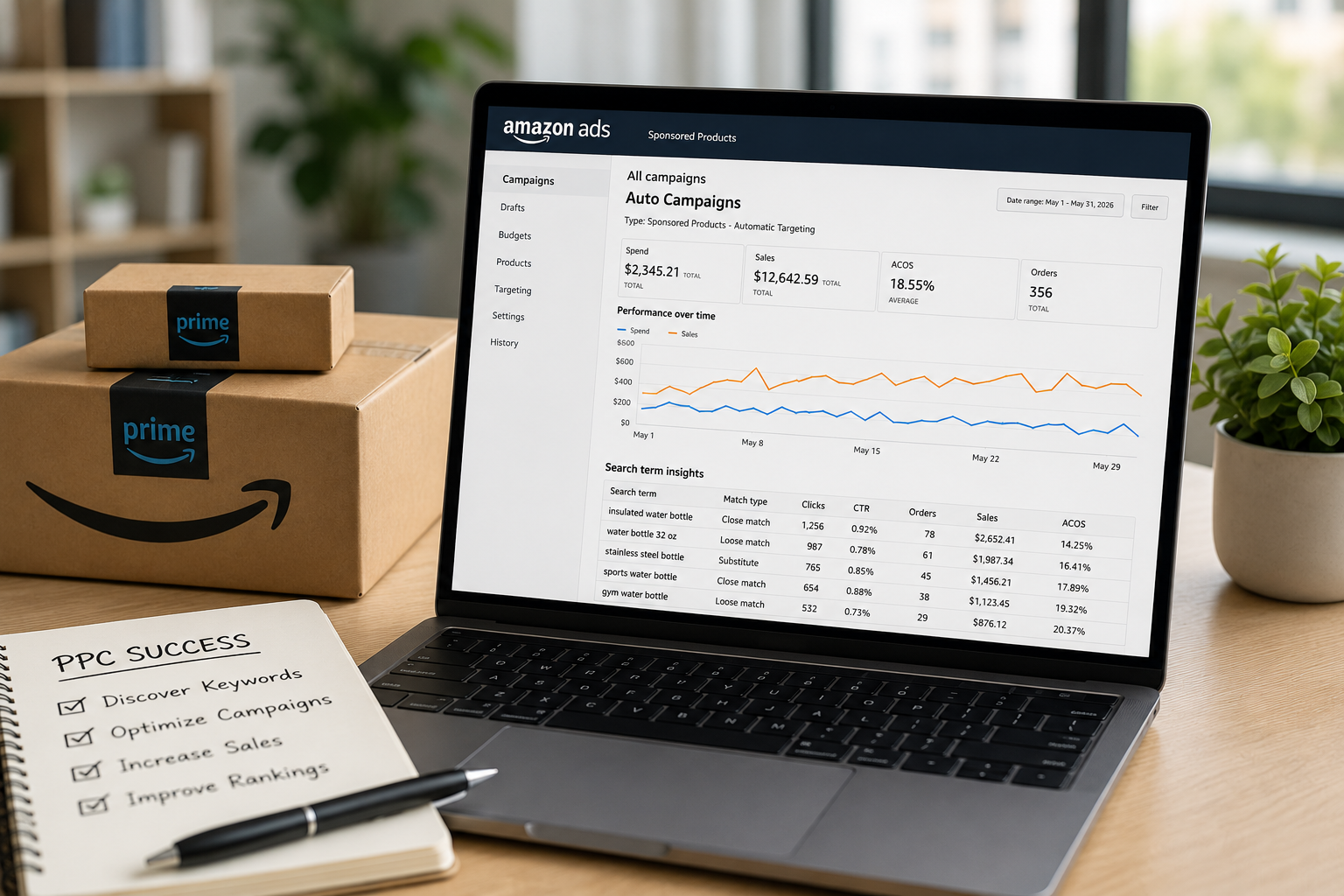
Amazon PPC auto campaigns are Sponsored Products campaigns where Amazon automatically determines which customer searches and product pages should display your ads.
Instead of manually selecting keywords, Amazon analyzes your listing, including your product title, bullet points, description, backend search terms, category, and customer shopping behavior. Based on that information, Amazon decides when your products are relevant enough to appear in search results or on competing product pages.
Unlike manual campaigns, your job isn’t choosing keywords—it’s optimizing the campaign using the performance data Amazon provides.
Source: https://advertising.amazon.com/library/guides/sponsored-products
Why Amazon PPC Auto Campaigns Are Still Essential
One of the biggest misconceptions about Amazon advertising is that auto campaigns should be paused once manual campaigns are built.
In reality, customer search behavior changes constantly. New competitors enter your category, seasonal trends emerge, and shoppers begin searching with phrases they weren’t using just a few months earlier.
Amazon PPC auto campaigns continuously discover these changes.
They help sellers identify new search terms before competitors, uncover profitable long-tail keywords, and reveal customer language that can improve both advertising and listing optimization.
For us, auto campaigns are less about automation and more about continuous market research.
How We Use Amazon PPC Auto Campaigns
Every Amazon PPC auto campaign we manage follows a structured optimization process.
Each week we review search term reports, analyze conversion rates, adjust bids, add negative keywords, and identify new opportunities for manual campaigns.
When an auto campaign discovers a search term that consistently converts, that keyword is promoted into a Manual Exact campaign where we can scale it with greater control.
Search terms that generate clicks without sales become negative keywords, helping improve efficiency over time.
This ongoing optimization allows auto campaigns to become smarter every week instead of simply running in the background.
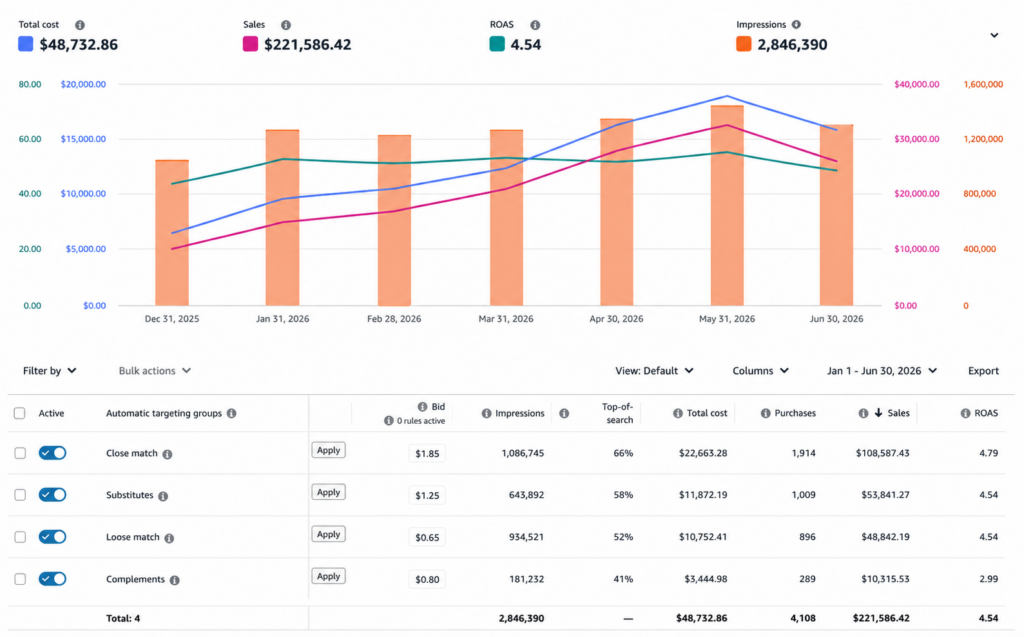
Understanding Amazon’s Four Auto Targeting Types
Amazon automatically separates traffic into four targeting groups.
Close Match
Close Match targets searches that closely relate to your product. These searches generally produce the highest conversion rates because customer intent closely matches what you’re selling.
Loose Match
Loose Match casts a wider net by targeting related search terms. While conversion rates may be lower, this targeting frequently uncovers valuable keywords sellers would never have considered manually.
Substitutes
Substitutes place your ads on competitor product listings when Amazon believes your product could serve as an alternative. This targeting is particularly useful for established products competing within crowded categories.
Complements
Complements display ads alongside products commonly purchased together. Although often overlooked, this targeting can expose your products to entirely new customer segments.
Source: https://advertising.amazon.com/library/guides/targeting-with-sponsored-products
Why We Separate Auto Campaigns
Many sellers place all four targeting types into one campaign.
While Amazon allows this approach, it limits optimization.
At Ecomergize, we typically separate each targeting type into its own campaign so each receives its own budget, bid strategy, and performance analysis.
This allows us to increase bids on high-converting targeting types while reducing spend on lower-performing segments. Instead of one targeting type consuming the entire budget, each campaign is optimized independently based on actual performance.
Amazon PPC Auto Campaigns Improve Organic SEO
One of the biggest advantages of Amazon PPC auto campaigns isn’t immediate sales.
It’s the keyword intelligence they generate.
Search term reports reveal how customers naturally describe your products. Those converting search terms can then be incorporated into your product title, bullet points, backend search terms, descriptions, and A+ Content.
Instead of relying solely on keyword research software, you’re using real purchasing behavior to improve your listings.
This creates a strong relationship between PPC and SEO, allowing both to improve together.
Common Amazon PPC Auto Campaign Mistakes
Many sellers reduce the effectiveness of their campaigns by making the same mistakes repeatedly.
Some pause auto campaigns too early after building manual campaigns. Others combine every targeting type into one campaign, never review search term reports, ignore negative keywords, or evaluate campaigns solely by ACOS.
Auto campaigns should be measured not only by their direct profitability but also by the long-term value of the keyword data they generate.
Best Practices for Amazon PPC Auto Campaigns
To maximize results, we recommend reviewing search term reports every week, promoting converting keywords into manual campaigns, continuously adding negative keywords, separating each targeting type into its own campaign, and using PPC data to improve listing SEO.
Consistent optimization almost always outperforms simply increasing bids or budgets.
Frequently Asked Questions
Should every seller run Amazon PPC auto campaigns?
Yes. Whether you’re launching your first product or managing hundreds of ASINs, Amazon PPC auto campaigns provide valuable keyword discovery that manual campaigns alone cannot.
How often should Amazon PPC auto campaigns be optimized?
Most established brands should review search term reports weekly to identify new keyword opportunities, adjust bids, and eliminate wasted spend.
Can Amazon PPC auto campaigns improve organic rankings?
Indirectly, yes. The search term data generated by auto campaigns helps improve listing optimization, making products more relevant for future organic searches.
Should auto campaigns replace manual campaigns?
No. The strongest advertising accounts use both. Auto campaigns discover opportunities, while manual campaigns scale proven keywords more efficiently.
Amazon PPC Auto Campaigns Should Be a Long-Term Strategy
Amazon PPC auto campaigns are far more than an automated advertising setting. They provide continuous insight into customer behavior, uncover valuable keyword opportunities, strengthen manual campaigns, and improve long-term organic visibility.
At Ecomergize, we’ve seen this strategy consistently outperform accounts that rely solely on manual targeting. As Amazon’s marketplace becomes increasingly competitive and customer search behavior continues to evolve, the sellers who continuously learn from their advertising data will have the greatest advantage.