Amazon quietly announced a significant refund policy change for Fulfilled by Merchant (FBM) orders that takes effect in late January 2026, and savvy brand operators should treat this like a mid‑season operational reset — because it impacts returns, cash flow, and dispute outcomes on orders you fulfill outside of FBA. [Source: EcommerceBytes]
For $500K–$20M brands, FBM still matters. It’s where you protect margin on bulky items, high‑SKU catalogs, regionally fulfilled products, and direct‑to‑consumer experimentation. These sellers tend to have different cost structures and customer expectations than FBA operators, and the refund policy tweak reflects that reality.
This post explains what’s changing, why it matters, and how to operationalize it before it goes live on January 26, 2026.
The FBM Refund Change Explained
Effective January 26, 2026, Amazon will update how refunds are processed on Fulfilled by Merchant (FBM) orders. The goal — according to Amazon’s communication to sellers — is to give sellers more time to assess returns and manage refunds for their own fulfillment operations. [Source: EcommerceBytes]
Prior to this change:
- FBM refunds often required immediate processing upon customer request or automatic triggers
- Sellers had limited flexibility in timing or evidence collection
- Cash flow could be impacted by premature refunds before a return was received
Under the new policy:
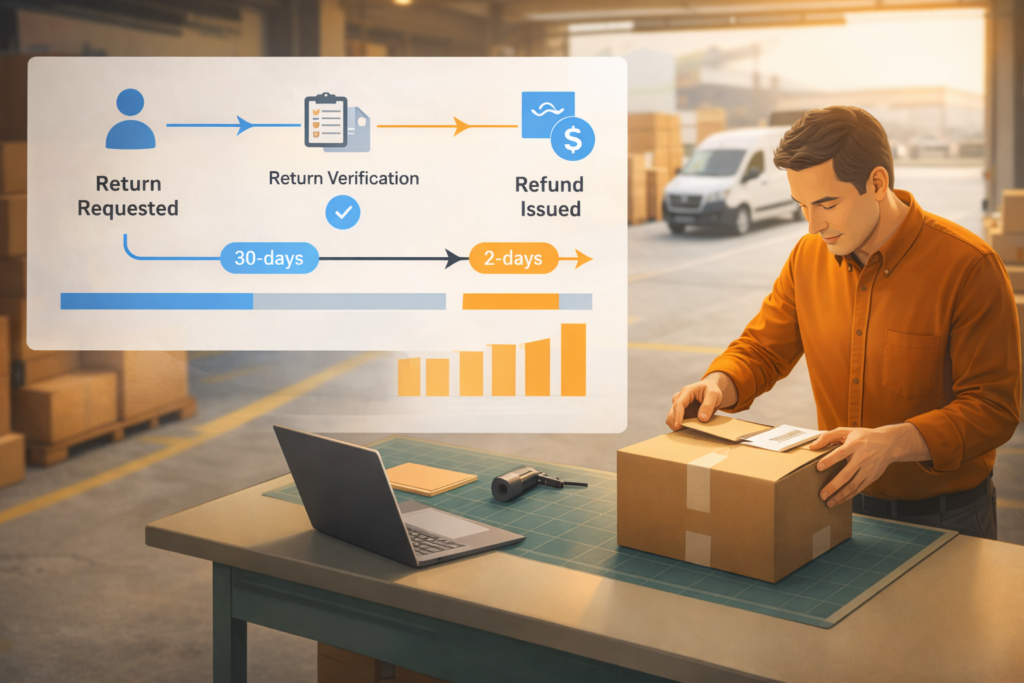
- FBM sellers will have expanded windows and updated processes to confirm returns before issuing refunds
- Amazon’s systems will adapt to allow sellers more control and time
- The intent is to improve return management visibility and reduce premature refunds that can strain cash flow and obscure logistics issues [Source: EcommerceBytes]
This is not limited to specific categories; it applies broadly to merchant‑fulfilled orders where the seller controls warehousing, shipping, and customer service.
Why This Matters for Brands (Even Beyond FBM)
On the surface, this looks like a minor administrative tweak. But for operators who run complex supply chains and high return volumes, the implications are strategic.
1. Cash Flow Management Gets Real
For brands fulfilling themselves, refunds can hit your books before you’ve seen the product or assessed its condition. That’s working capital tied up in uncertainty.
This policy gives you more runway to:
- Confirm the item was actually shipped
- Assess its condition upon return
- Protect against fraud and misuse
This shift protects margin — especially in categories with high return rates (apparel, consumer electronics, accessories, etc.). [Source: EcommerceBytes]
2. Returns Ops Gets Discipline
One of the biggest hidden drains in FBM is reverse logistics ambiguity — when a return triggers a refund before you’ve verified it or scheduled pickup.
Under the updated process:
- You can better sync refund timing with your physical return receipts
- You can reduce premature refunds that complicate inventory reconciliation
- You’ll have data‑driven control over when and why refunds are issued [Source: EcommerceBytes]
This won’t eliminate returns, but it’ll reduce avoidable loses and keep your inventory accounting cleaner.
3. Differentiate FBM vs FBA Strategically
Most mid‑market brands use a hybrid approach: FBA for velocity SKUs and FBM for oversized or margin‑sensitive lines.
This policy means:
- FBM becomes more predictable operationally
- You can confidently price to cover return risk without guesswork
- Policies like partial refunds, returnless options, and disputes become more tactical decisions
Among brands that blend fulfillment strategies, this clarity is an advantage — not a burden.
Operational Steps to Prepare (January 2026 Rollout)
This isn’t something you can ignore until the last week of January. A successful transition will require updates in operational systems, workflows, and customer service playbooks.
Here’s your actionable checklist:
1) Audit Your Current FBM Workflow
Map your current refund process. Document:
- Where refunds are triggered
- Which team owns return confirmations
- How data is logged for disputes
This baseline helps you identify where the new timing flexibility adds control — and where it exposes gaps.
Why it matters: If your refund triggers automatically before return receipt, this policy rewrite gives you the window to shift that. If your system already waits, you’re ahead.
2) Train Customer Service & Operations
Refund logic often lives in customer support systems. Train teams on:
- When to issue refunds under the new timeline
- How to coordinate with returns receiving
- When escalation is appropriate for disputes
Remove ambiguity now — before the policy lands.
3) Sync Shipping & Returns Data
For brands using multiple carriers or Logistics Service Providers:
- Ensure your shipping data flows into your order management systems
- Track returns receipts electronically where possible
- Align refund triggers with actual return milestones
Modern OMS tools that centralize return scans and refund rules will be far more useful under the new policy.
4) Update SOPs & Refund Rules in Software
If you’ve automated refunds via marketplaces, OMS, or third‑party tools:
- Review refund timing settings
- Adjust triggers to wait for verified return
- Flag exceptions like no‑returnable categories
These rules will protect cash flow and reduce manual reconciliation.
Strategic Considerations for Brand Leaders
This isn’t just a process tweak — it’s a signal.
Amazon is acknowledging that merchant‑fulfilled sellers need more operational control. That’s because FBM is integral to:
- Large / heavy product categories
- Regionally expedited shipping
- Personalized packaging and fulfillment experiences
- Cost‑sensitive margins that don’t justify FBA fees
When the platform gives more time for FBM refund handling, it’s recognizing that mid‑market operational complexity needs breathing room — not automation that pulls money out of your account before you’ve seen the product. [Source: EcommerceBytes]
Brands that prepare will:
- Tighten return fraud defenses
- Gain clarity on true return rates
- Better forecast cash needs tied to returns
Those that don’t will continue to bleed profit through premature refunds and contest‑driven chargebacks.
Our Final Take
Amazon’s new FBM refund policy isn’t just a technical update. It’s a maturity moment in marketplace operations for brands that still handle their own fulfillment. It realigns incentives and gives merchants a chance to take back control — if they prepare.
Brands who treat this as an opportunistic reset — refining workflows, tightening return visibility, and aligning CS and fulfillment teams — will extract measurable margin improvements in 2026.
Other brands will wonder why they still struggle with returns costing more than they should.