Selling in Amazon Italy Won’t Have Any Major Changes to Delivery
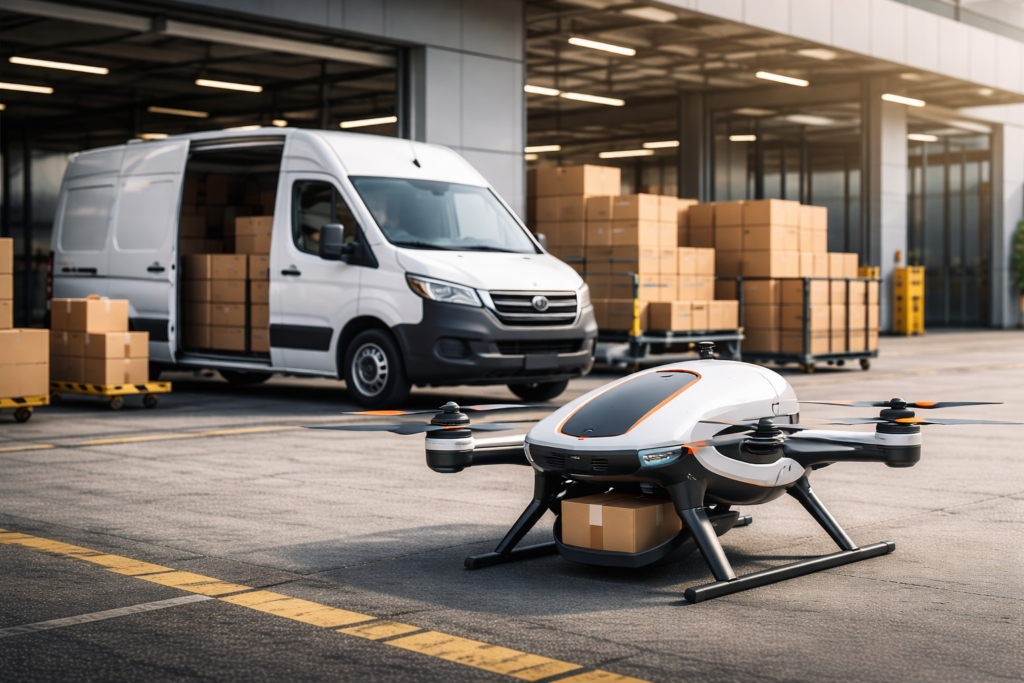
Amazon’s drone delivery initiative has been one of those high‑visibility experiments that promises to redefine last‑mile logistics: autonomous units, rapid delivery windows, and the kind of future science‑fiction that boardrooms love. Amazon tested the technology in San Salvo, Abruzzo back in 2024 with apparent success, and regulators in Italy were part of an early partnership to figure out safety and airspace integration.
Yet as of December 28, 2025, Amazon publicly stated it will no longer pursue that program commercially in Italy after reassessing the broader environment. The decision reportedly stems from regulatory and operational challenges that outweigh short‑term gains for that region. [Source: Reuters]
This isn’t a complete shutdown of Amazon’s interest in drone tech — it’s a strategic pause where risk doesn’t yet justify scale deployment in a specific market.
Why This Matters for Marketplace Brand Operators

1. Logistics Innovation Isn’t Guaranteed Global Infrastructure
Brands often hear about tech rollouts and immediately start dreaming of competitive advantage — “when drones deliver our premium SKUs next day…” But at the end of 2025, real‑world deployment still hinges on policy, safety oversight, and geography. If Amazon can’t align those forces in Italy, one of Europe’s larger e‑commerce markets. it signals that near‑term drone delivery isn’t a reliable logistics vector you can count on for scaling operations.
If you’re planning for 2026 logistics improvements, stack drone capacity behind fulfilled expectations like diversified fulfillment centers, multi‑location inventory, and regional carriers — not futuristic delivery unless it’s part of a confirmed roadmap in your key markets.
2. Regulatory Reality Shapes Access
What this move highlights is something brands should internalize: you don’t win on marketplace strategy without understanding non‑market forces — from airspace regulators to cross‑border standards. Amazon’s retreat in Italy came not from tech failure, but from regulation and strategic reassessment. Reuters
Brands that lean heavily on regulatory‑dependent differentiators (e.g., same‑day delivery, cross‑border immediacy) should build strategies that assume heterogeneous rules across markets. Italy today, Germany tomorrow — nothing is guaranteed.
3. This Clarifies Where to Invest in 2026
With drone delivery hype momentarily de‑prioritized, the operational battleground for brands becomes clearer:
- Regional fulfillment optimization: More investment in distributed warehouses, multi‑location stock buffers, and smarter reorder points.
- Carrier partnerships over innovation skews: Negotiate with proven couriers with deep networks rather than speculative tech.
- Marketplace pricing agility: If logistics can’t carry the day, pricing and conversion drivers must.
In essence, drone delivery was never going to be the first lever for profitability for most brands — and now it’s even less so.
The Larger Trend: Amazon’s Innovation Portfolio is Being Rationalized
This isn’t an isolated change. Across 2025, Amazon has been juggling a multitude of tech and marketplace shifts — from AI shopping assistants that significantly boost buyer conversion rates to evolving logistics expansions in multi‑channel fulfillment. Fortune
Some exciting projects become regional experiments. Others get broader rollout. This Italian drone decision tells us that Amazon is choosing where to double down and where to decelerate, and the winners will be brands that adjust expectations accordingly.
Practical Takeaways for Brand Operators
Here’s how leaders with $500K–$20M brands should internalize this news into action — no guesswork, no hype:
➡ Invest in proven delivery reliability — not speculative features
Same‑day and next‑day delivery still thrives on carriers with infrastructure. Align your service promises with what carriers legally and operationally deliver today, not what might exist in a pilot.
➡ Map fulfillment to market‑specific realities
Italian drone plans faltering doesn’t just reflect one country — it reflects the complexity of scaling advanced logistics across different regulatory regimes. Build your 2026 fulfillment playbook with redundancy and backup carriers that have established permissions in your key regions.
➡ Track Amazon’s official innovation signals, not unofficial noise
Amazon corporate announcements and AWS tech launches (e.g., AI backend capabilities) often get real deployment later in Seller Central or vendor tools. Focus on confirmed Seller Central updates, logistics partner expansions, and fulfillment features in Amazon’s announcements. [Source: Sell on Amazon]
Ecomergize Angle: Where To Focus Next
If you’re a marketplace brand and you want to win in 2026, don’t chase drones. Chase predictable delivery improvements, supply chain resilience, and compliance clarity. That’s where you’ll reduce cost, avoid stockouts, and earn real market share — while your competitors wait for a tech future that may never arrive.